Categories
Empowerment

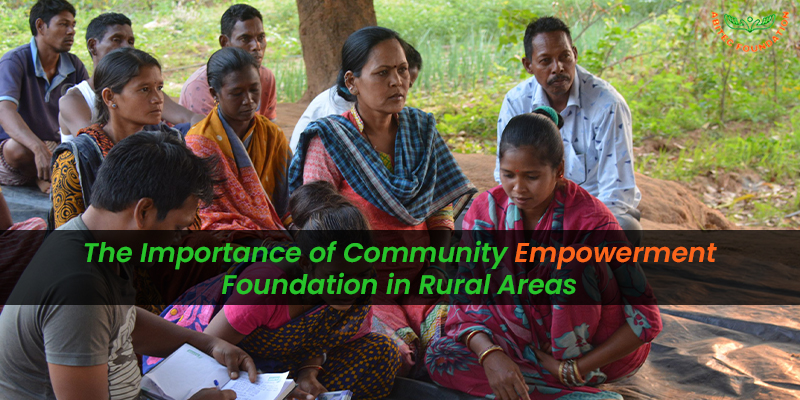
The Importance of Community Empowerment Foundation in Rural Areas

Community empowerment is more than a project or program. It’s simply about providing people with the right tools, knowledge, and confidence to shape their own lives. In a world where inequality is growing, job opportunities are limited, and climate challenges are rising, this approach is relevant and necessary. A small village where women lead local businesses, youth speak confidently about their dreams, children walk into classrooms every morning, and neighbours join hands to solve everyday problems. This isn’t just a hopeful vision – it’s the true meaning of community empowerment.

In today’s blog, we will dive deeper into community development and its relevance to the local communities of India. Keep reading to find out more.

But first…

What Is Community Empowerment?

In simple terms, community empowerment is the process of enabling people to take control of their development. It teaches them that, instead of waiting for outsiders to bring about change, communities can lead that change themselves using local skills, voices, and solutions. This concept is most relevant in underprivileged or rural areas, where a lack of resources coincides with limited opportunities for the people.

Some of the key principles of community empowerment are:

  • Active Participation where everyone has an opinion in decision-making.
  • Leadership qualities that encourage people to take on leadership roles and initiate change.
  • Ownership allows them to take responsibility.
  • And, capacity building teaches them basic life skills to solve problems easily.

Why Community Empowerment Matters So Much Today?

In short, traditional development often employs a top-down approach. Outsiders come, set up projects, and leave, and the people in rural areas use them as they are. However, the problem is that many well-intentioned efforts failed to create a lasting impact because they didn’t listen to the people they wanted to help.

In today’s world, where we face increasingly complex challenges such as climate change, unemployment, inadequate education systems, rural-urban migration, and widening social gaps, we need more people-powered solutions that enable them to address or at least consider these issues and their potential solutions.

Here are the reasons why community empowerment is essential today:

  1. Long-Term Impact
    Community empowerment means there will be empowered communities that don’t need to or want to wait for help. They learn to help themselves. This is long-term progress, not temporary results and development.
  2. Improved Equality
    Empowerment gives a voice to everyone, especially women, youth, and communities that are mostly excluded from society, promoting fairness and dignity for all.
  3. Stronger Local Economies
    Community empowerment, when combined with skill-building and job support, enables individuals to start small businesses, find employment, and increase local income levels, thereby improving their financial and economic conditions.
  4. Better healthcare and educational facilities

When communities are empowered, it allows people to take initiatives, understand the importance of education and healthcare facilities, and send their children to schools or local educational institutions, seeking professional medical help instead of ignoring their health and hygiene issues. 

  1. Strong Community during crisis 

Community empowerment motivates people to respond to natural disasters or pandemics that can cause massive loss if not handled effectively. It not only helps them respond more quickly and save lives without compromising, but also helps them recover faster. 

So, How Does Community Empowerment Work?

Empowerment is a step-by-step journey of collaboration, consistency and trust. In such cases, NGOs or foundations like Abitech Foundation help in the following ways:

  • Listen First for Assessment
    Since NGOs bring about the change, they start by understanding the people and their views or issues. NGOs and foundations talk to locals, listen to their challenges, aspirations and ideas.
  • Workshops and Training
    Based on their specific needs, these foundations develop workshops and training programs covering a range of topics like farming, tailoring, financial literacy, digital skills, health and more, tailored to the community’s needs.
  • Empowering Local Leaders
    We help communities identify and support natural leaders, especially women and youth, to drive their change and become independent and have a stable income.
  • Self-Help Groups
    These small groups promote savings, microloans, mutual support and entrepreneurship, through which people help each other.
  • Awareness
    Most people from rural areas are unaware of their rights. NGOs ensure they are informed of their fundamental rights to healthcare, education, clean water, and government benefits. Awareness is achieved through visuals, conversations, and other means that capture the attention of the communities.
  • Ongoing Support and Feedback
    Finally, NGOs help communities set up training programs to monitor their progress, so growth is tracked and adjusted over time.

Role of a Community Empowerment Foundation

These organisations bridge the gap between underprivileged communities and their potential. The NGOs and foundations:

  • Meet local panchayats and discuss the issues.
  • Organise workshops, camps and awareness programs to spread knowledge.
  • Raise funds and distribute them to those who need them.
  • Document the change and share with other communities to inspire them to bring change too!
  • Finally, they collaborate with the government to develop and implement policies that are more effective and applicable to these communities.

Where can they make the most impact?

During this process, the organisations focus on bringing change in the following areas:

  1. Education

Education is for everyone. Social workers from these foundations focus on getting children enrolled again, building learning centres run by trained volunteers and finally, getting parents involved in school activities.

  1. Women Empowerment

Since women’s empowerment is also a societal shift, foundations also build women-led SHGs and cooperatives, offer legal literacy and rights awareness and teach communities more about digital and financial independence.

  1. Livelihood & Skills

They organise vocational training: tailoring, carpentry, IT, farming, crafts, which is effective in supporting small businesses and job placement programs. They also promote eco-friendly products and sustainable trades.

  1. Health & Hygiene

Foundations take care in developing positive training for local health workers on nutrition, hygiene and disease prevention. They also organise medical camps and check-ups, as well as menstrual health and maternal care.

  1. Environment & Sustainability

These communities are taught about tree-planting and water conservation drives, introducing clean energy like solar lighting or smokeless stoves and educating them on waste segregation and eco-practices for a greener and healthier environment.

  1. Civic Participation

Finally, they work on awareness of voting rights and village governance, access to ration cards, pensions and schemes.

Bottom Line 

The Community Empowerment Foundation is an essential group of activists who work with communities that are unable to improve their lifestyle on their own. Organisations like the Abitech Foundation develop strategies and workshops that encourage youth and women to stand up for their rights and claim them, while empowering them to take the lead. 

Join us while we change the world for the better, and call us at: 7608062303 or 9853223454
Categories
NGO supporting education

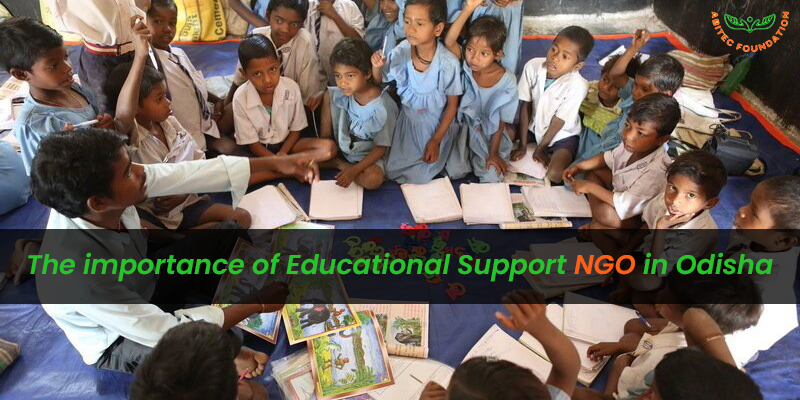
The importance of Educational Support NGO in Odisha

An NGO, or a Non‑Governmental Organization, is an independent, not-for-profit entity formed by individuals or groups to address social issues. However, in terms of education, NGOs operate outside government-run systems to provide access to free or affordable education, advocate for policy change, and offer innovative solutions where traditional systems fail. While rooted in community insights, it is guided by a mission, not profit, and often collaborates with governments, the private sector, and social communities.

We recognize that education is a cornerstone of social and economic progress; however, many underprivileged children, particularly in rural and disadvantaged urban areas, lack access to basic education. NGOs fill the gap here between these children and their educational rights. 

In today’s blog, we will discuss what Educational Support NGOs in Odisha entail and why they are essential.

Continue reading to learn more about the Abitech Foundation. 

What does ‘’Educational Support’’ mean?

As we mentioned earlier, NGOs serve and innovate on behalf of the underprivileged. When we say educational support, we mean that these non-profit organizations offer the following:

  • Access
    NGOs fill the enrollment gaps and encourage children from marginalized backgrounds to attend school. This leads to dropout prevention through remedial classes, counseling, and incentives for students.
  • Quality Enhancement
    Then, they focus on Teacher training. During this process, teachers are taught how to improve their pedagogy, classroom management, and inclusive teaching. They are also supported with remedial assistance that addresses learning loss and digital innovation by providing multimedia learning resources. This is a comprehensive package that keeps both teachers and students engaged and interested.
  • Holistic Development
    NGOs also focus on holistic development, preparing children for life beyond the school years. They provide nutrition and mid-day meals that combat hunger. These programs have also encouraged many kids and their parents to pursue education.
  • Policy and community participation

The NGOs play a significant role in influencing state policy regarding support, as well as encouraging parents and local councils to participate and organize programs for active participation. 

The Importance of Educational Support in Odisha

Education is uneven in Odisha as it has socially and geographically diverse areas. This often results in a literacy gap even when they are enrolled in local schools.

One of the main reason for this is socio-economic barrier. Problems like poverty, child labor, gender norms, early marriage, and migration hinders educational access. besides that, not only seasonal migration disrupts literacy but also young girls are prevented due to safety concerns, distance and household responsibilities.

Educational support in Odisha is a necessity for the following reasons: 

  1. No Schools

Many villages are located in remote areas where there are no proper roads or nearby schools. So the children have to walk long distance to attend classes. While this sounds not so big, it can directly discourage regular attendance.

  1. High Dropout Rate

Dropout rate in Odisha is very high due to poverty, migration or need to help at home, many children. In fact many girls drop out of school before completing their education.

  1. Poor Infrastructure

In many cases even where schools exist, they lack basic facilities like clean toilets, electricity, furniture and enough teachers to fill in the gaps.

  1. Language Barrier

Odisha has many tribal languages and many children don’t speak Odia, let alone English. So when they first enter school, it becomes difficult for them to learn unless supported by trained teachers or community educators.

  1. Lack of Awareness

In some communities parents don’t fully understand the long term value of education. They only prioritize earning a living over sending their children to schools.

Types of Educational Support Provided by NGOs:

The following are some of the types of educational support offered by NGOs:

  • Academic Support
    This provides extra classes, tutoring, homework help and remedial lessons for students who are behind.
  • School Enrollment Drives
    This is to encourage children to go to school, especially in remote areas where education is not a priority.
  • Teacher Training
    This helps teachers to learn modern and child friendly teaching methods so they can motivate the students to study.
  • Community Awareness
    This involves talking to parents about why education is important and how they can help their children learn.
  • Digital Learning
    Digital learning involves introducing technology like tablets and online tools in schools.
  • Girls and Children with Disabilities
    Since women’s safety is a general concern, NGOs create a safe and inclusive space for all children to learn.
  • Health & Nutrition
    And finally meals, clean water and hygiene education to keep children healthy and in school.

Bottom Line

Educational support NGO in Odisha is a simple vision that focuses on building a stronger future for every child. It offers basic education to the children between the age of 6 to 14, empower female children to study and be independent, and finally, raise awareness of human rights. Abitech Foundation is one such organisation that actively focuses on improving the condition of rural education. 

Get in touch with us for more information. 

Categories
NGOs

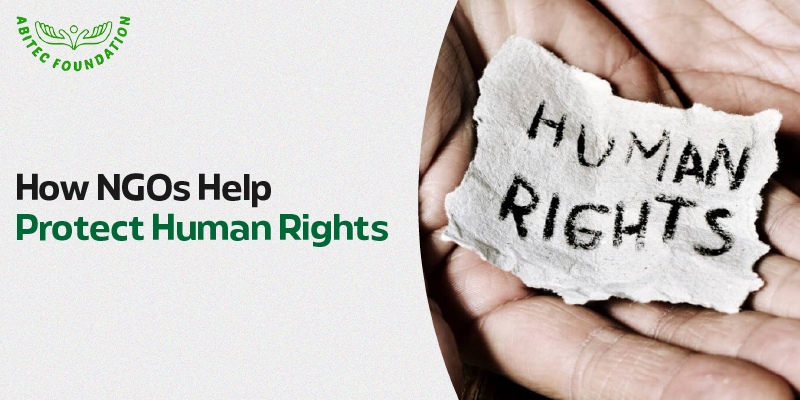
How NGOs Help Protect Human Rights

Social empowerment is all about helping people feel stronger and more in control of their own lives. That could mean making your own choices or working together as a group to bring change. A non-profit organization in Odisha helps make that happen by offering support where it’s really needed.

How NGOs Protect Human Rights

  1. Giving a Voice to the Overlooked

NGOs help out where the government can’t always manage. They go into regions that might be ignored and make sure that no one is left behind. For women, children, refugees, and minority groups, NGOs help protect rights and make sure their voices are heard.

  1. When Plans Change They Adjust

Big organisations can be slow. There’s always a process, and everything takes time. NGOs don’t have that problem. If something needs to be done, they just roll up their sleeves and get on with it. They try things, see what works, and adjust along the way. It’s that kind of quick thinking that really helps when time is short.

  1. Sharing What Others Want to Hide

NGOs are often the ones who go in and see what is really happening. They do not have to follow anyone’s line, and they are not afraid to report things as they are. If people are being treated badly or ignored, NGOs make sure it gets noticed. Their reports go to the people who can take action, and sometimes that is what pushes things to change. Without them, many stories would go unheard.

  1. Helping Women Find Their Voice

Real change starts when women are given the chance to grow on their own terms. NGOs understand that many still face struggles just because of their gender, and they’re working to change that. With the right support, women can feel more confident, more secure, and more in control of their lives.

Here’s what we’ve been working on:

  • Running self-defence workshops in schools, colleges, and local communities
  • Organising talks and group sessions about women’s health, rights, and financial independence
  • Offering vocational training to help women gain job-ready skills
  • Setting up a helpline where women can report abuse and speak to someone for legal guidance
  • Providing microfinance support for women who want to start their own businesses
  • Holding regular sessions to talk about domestic violence and discrimination, and how to get help
  1. Making Sure Everyone Gets a Chance to Learn

The NGO believes that no child should be held back just because of where they’re born. By setting up schools in areas that need them most, they’re making sure more children get the education they deserve.

  1. Health Care for Communities

Good health should never be out of reach. The NGO runs medical camps and health awareness drives to support people who often go without basic care. By making healthcare more accessible, they’re helping communities stay strong and thrive.

  1. Human Rights Advocacy and Awareness

An NGO plays an active role in promoting human rights and pushing for social change. Through public events, community engagement, and media outreach, they work to raise awareness about key human rights issues. These efforts are not just about sharing information; they’re about encouraging people to speak up, get involved, and stand against injustice in their everyday lives.

  1. Measuring Impact and Future Goals

NGOs regularly look at how their work is making a positive impact. By using proper tools to monitor and evaluate progress, they can see what’s working well and where they need to do better. This helps them shape their plans, make smarter choices, and ensure that their efforts continue to create real, lasting impact.

Conclusion

In today’s world, human rights are still being denied to many. NGOs play an important role by standing up for those who are unheard, supporting communities, and pushing for fair treatment for all. A non-profit organisation in Odisha, like Abitec Foundation, works on the ground to bring real change where it’s needed most.

If you care about fairness and want to help in a simple, honest way, get in touch with us.

Frequently Asked Questions

  1. What does social empowerment really mean?

It’s about helping people take charge of their own lives. That might mean gaining confidence, learning new skills, or coming together to bring change to their community. 

  1. How do NGOs support human rights?

NGOs step in where help is needed most. They speak up for people who are often overlooked and ensure their rights aren’t forgotten. They also raise awareness and share the truth about what’s really happening on the ground.

  1. How can I support a non-profit organization in Odisha, such as Abitec Foundation?

It can be as simple as spreading the word, making a donation, or volunteering your time. If you care about fairness and community, reach out to Abitec Foundation and see how you can get involved.

Categories
Social justice

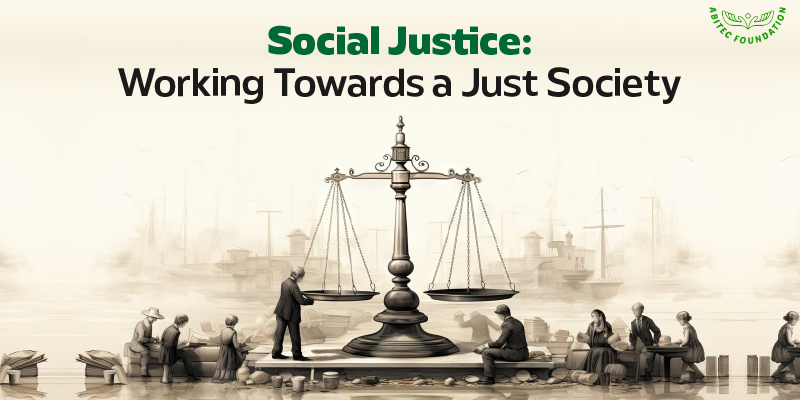
Social Justice: Working Towards a Just Society

Social justice means everyone gets the same chance to live with dignity. It means making sure that people, no matter their background, have equal access to opportunities and are treated with respect. Many non-profit organizations are working quietly to make this happen. One such effort comes from a social justice NGO in India that has seen real change by helping people who are often overlooked.

Social Justice Matters—Here’s Why

People see social justice in different ways. That might seem like a problem, but it’s actually part of the solution. It helps us grow and include more voices. Here’s why it matters.

  • Better education gives everyone a fair chance to learn and grow, no matter where they come from
  • Access to healthcare should not depend on money or where you live, because everyone deserves proper care
  • Social justice includes standing up for the rights and needs of people with disabilities
  • It helps deal with discrimination and brings people closer together, no matter their background or identity
  • By opening up fair opportunities, social justice helps reduce poverty and close the wealth gap
  • It protects people from harmful stereotypes and ensures equal treatment under the law
  • When barriers are removed more people thrive and that leads to stronger economic growth for all
  • Social justice brings people together and helps build peace through respect and understanding
  • It encourages us to care for each other and take responsibility for our communities and the planet
  • When everyone gets a fair shot life improves for all of us

The Role of NGOs in Promoting Social Justice

  1. Speaking Up For People

When voices are overlooked, NGOs help make them heard. They help bring attention to problems that many might ignore, like unfair laws or people being pushed off their land. They talk to the people affected, collect the facts, and then speak up on their behalf. By working with local groups and the community, NGOs make sure the voices of ordinary people reach those who can do something about it.

  1. Support That Reaches People

It is not always about speeches and campaigns. A lot of NGOs offer real help to people who need it most. They provide access to schools, clinics and skill-building programmes that open up new opportunities. A good NGO for social justice focuses on reaching these communities and giving them the tools to build a better life.

  1. Making Healthcare More Equal

In many places, basic healthcare is still out of reach. NGOs help by bringing doctors to remote areas, holding health camps, and calling for better local care. They help people stay healthy through mobile clinics, free check-ups, and simple advice on hygiene, clean water, and vaccines.

  1. Standing up for Women’s Rights

Gender inequality is something people still face every day. NGOs step in to support women in real, practical ways. They offer training, skill-building and small loans to help women earn their own income and build a life with more independence.

Many also provide safe spaces, legal help and counselling for those facing abuse or violence. They push back against outdated views and unfair rules that limit women.

These efforts help build a world where women can feel safer, stronger and more in control of their future.

  1. Working with the Government and Private Sectors

NGOs know they can do much more when they work with others. Partnering with the government helps them push for better laws and make sure policies support fairness and equal treatment. These connections also open doors to funding, make it easier to run projects, and help them reach people who really need support.

Private companies also play a key role. Many businesses back social projects through their own responsibility efforts, offering money or resources these non profit organizations can put to good use. When the goals of an NGO and a company line up, they can deal with social problems in smarter ways and make a bigger impact together.

Conclusion

A better world begins with looking out for those in need. A strong social justice NGO India stands for equality, dignity, and real change. That’s what Abitec Foundation does every day. Be part of something meaningful. Become a partner today!

Frequently Asked Questions

  1. What does a social justice NGO in India do?

They support fair access to education, healthcare, and rights while helping marginalised groups through real community work.

  1. Why is social justice important, and how can I support it?

It ensures equal chances for all. You can support it by backing a trusted social justice NGO India like Abitec Foundation.

Donate Now

Scan QR code
Bank Details (NEFT/IMPS)
A/C No. 50200109122206
IFSC: HDFC0002694
Branch: Chandini Chowk, Cuttack
If Any Issue Please fill the Form!